Before the three volumes of The T Trilogy, before Me When, and before AI was available to the public, the making of BEINGIS was already coming into form.
In Tim's earlier writings, dating back to 1987, we see the philosophy being articulated and the metaphysics becoming physical. These are some of the earliest things Tim Hanley wrote, typed and kept, from a first document in 1987 and a college paper in the spring of 1988 to poems of the early 1990s. They are shown as they were, with a note beside each one. The ideas that became BEINGIS first took shape here: what thoughts are, whether anything is ever truly lost, and what it means that being is.
Dates are Tim's recollection unless a date is written on the page. Names of classmates and interviewees have been replaced with initials. More pages will be added.
1987 · Tim's recollection
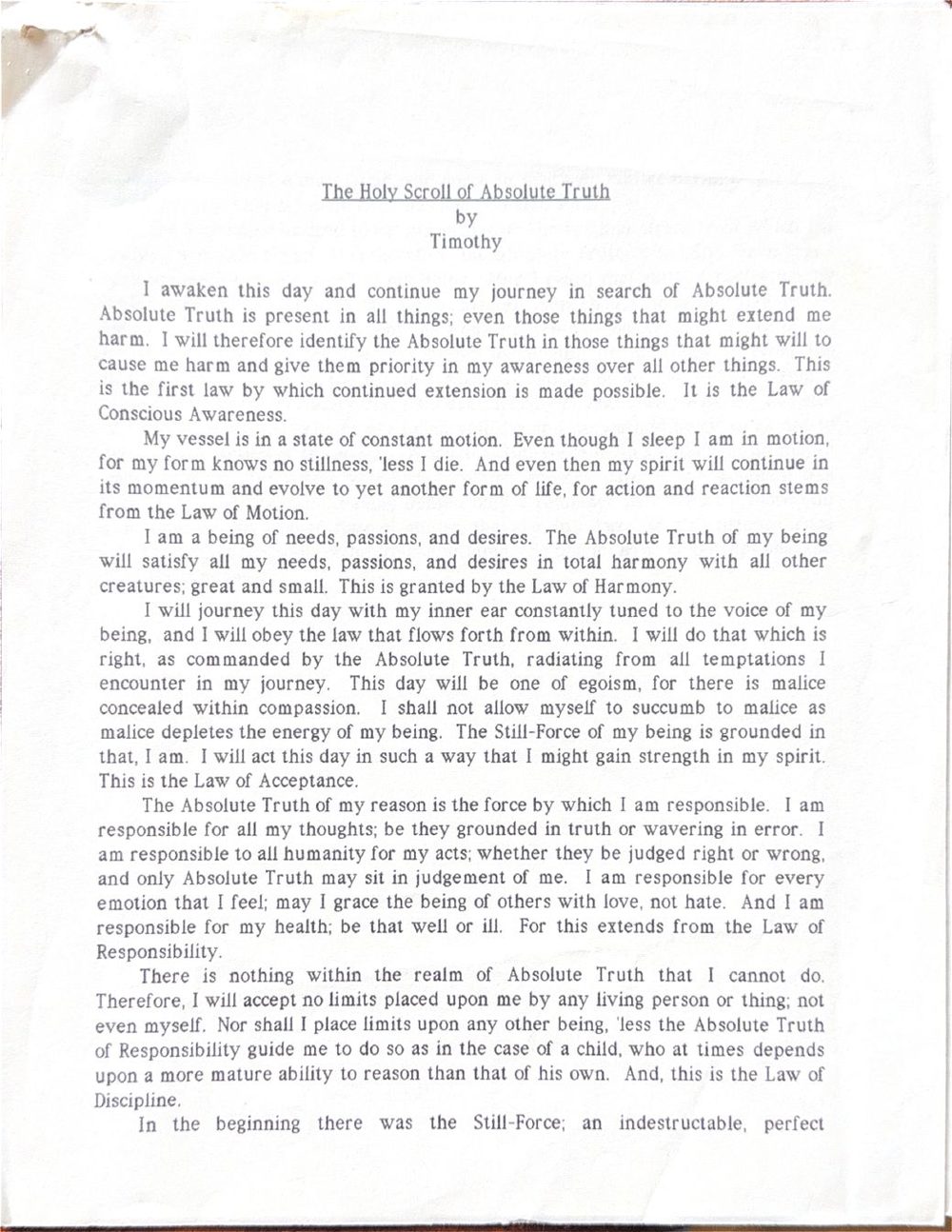
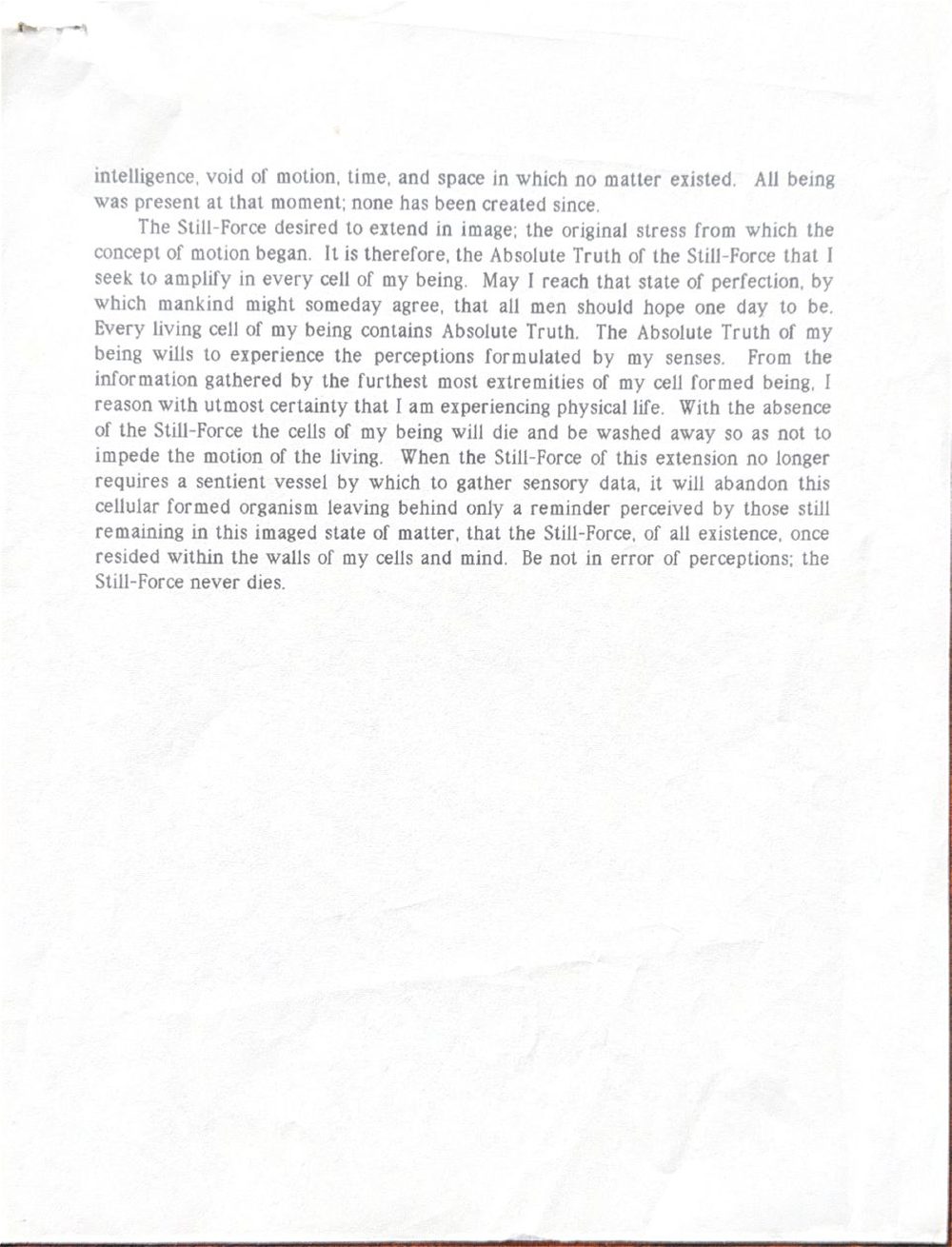
The Holy Scroll of Absolute Truth
Tim's first document, written in 1987 after the encounter on the Road to Monahans that opens BEINGIS. The handwritten original is lost. This is the earliest copy he has, a typed version of it, and it is shown here as it is.
It reads as a morning affirmation, spoken in the first person by someone seeking Absolute Truth, with a set of named laws: Conscious Awareness, Motion, Harmony, Acceptance, Responsibility and Discipline. At its center is the Still-Force: an indestructible, perfect intelligence that existed before motion, time and space, with all being already present in it. When it desired to extend itself in its own image, that became the first stress, and motion began. The scroll closes on the line that “the Still-Force never dies.”
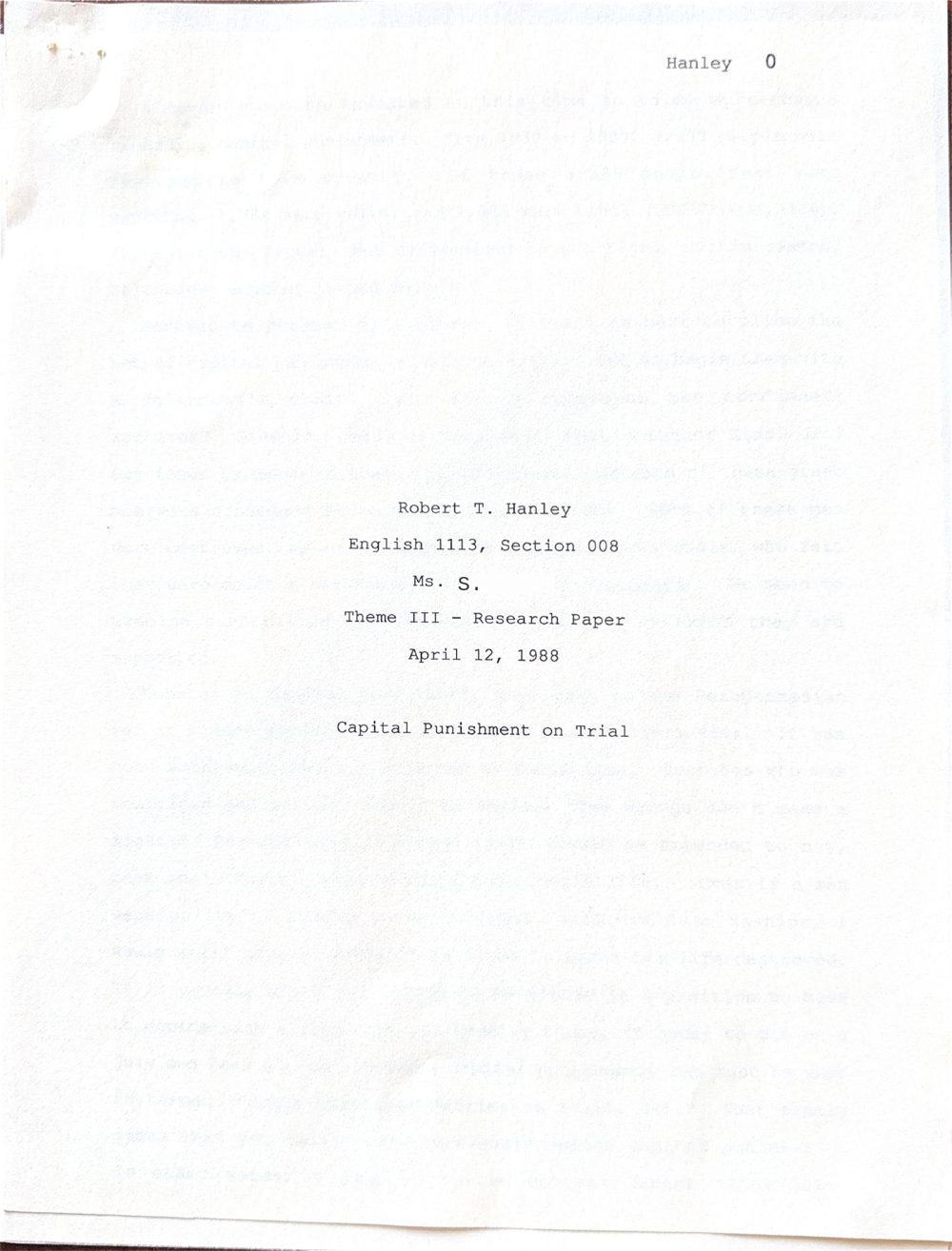
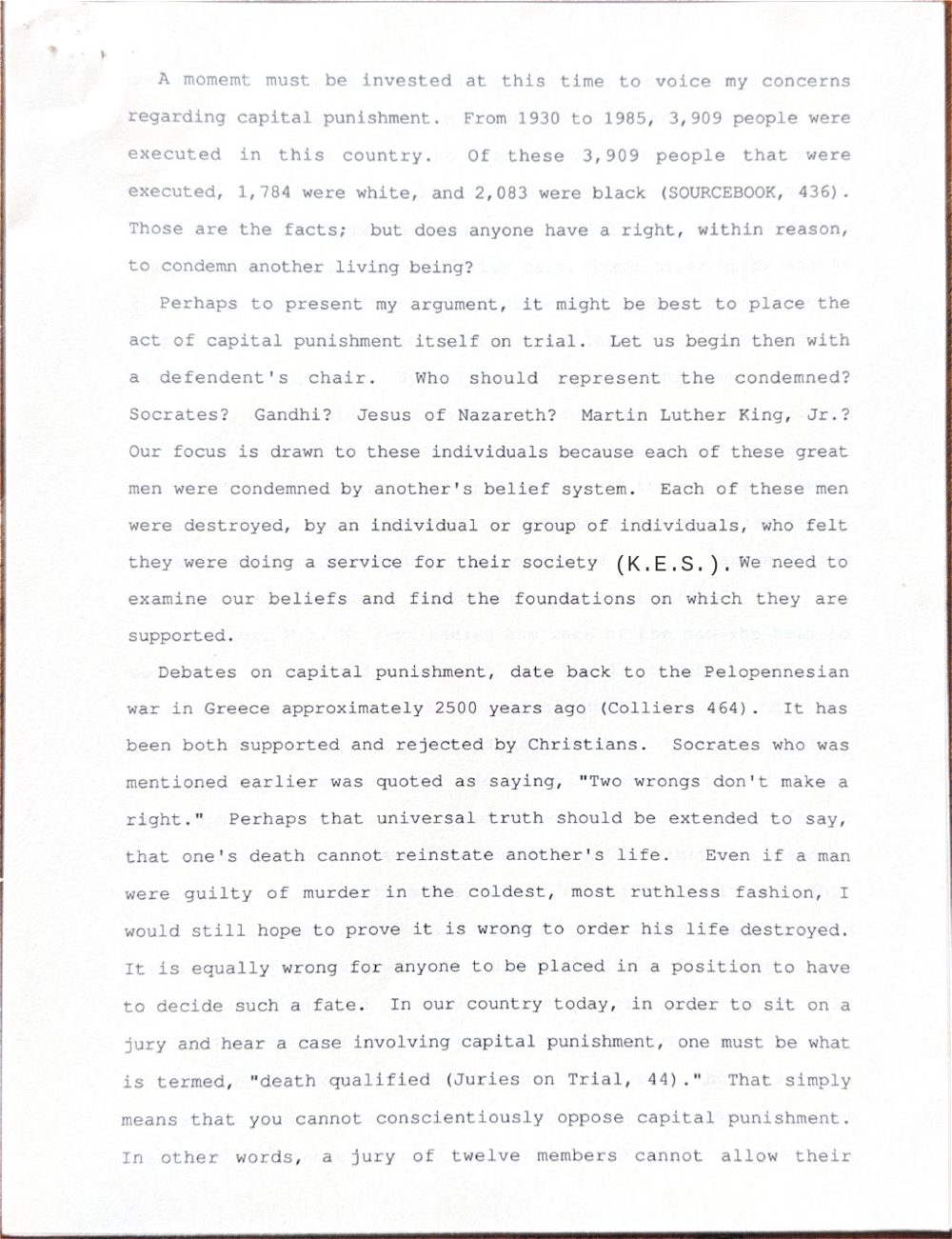
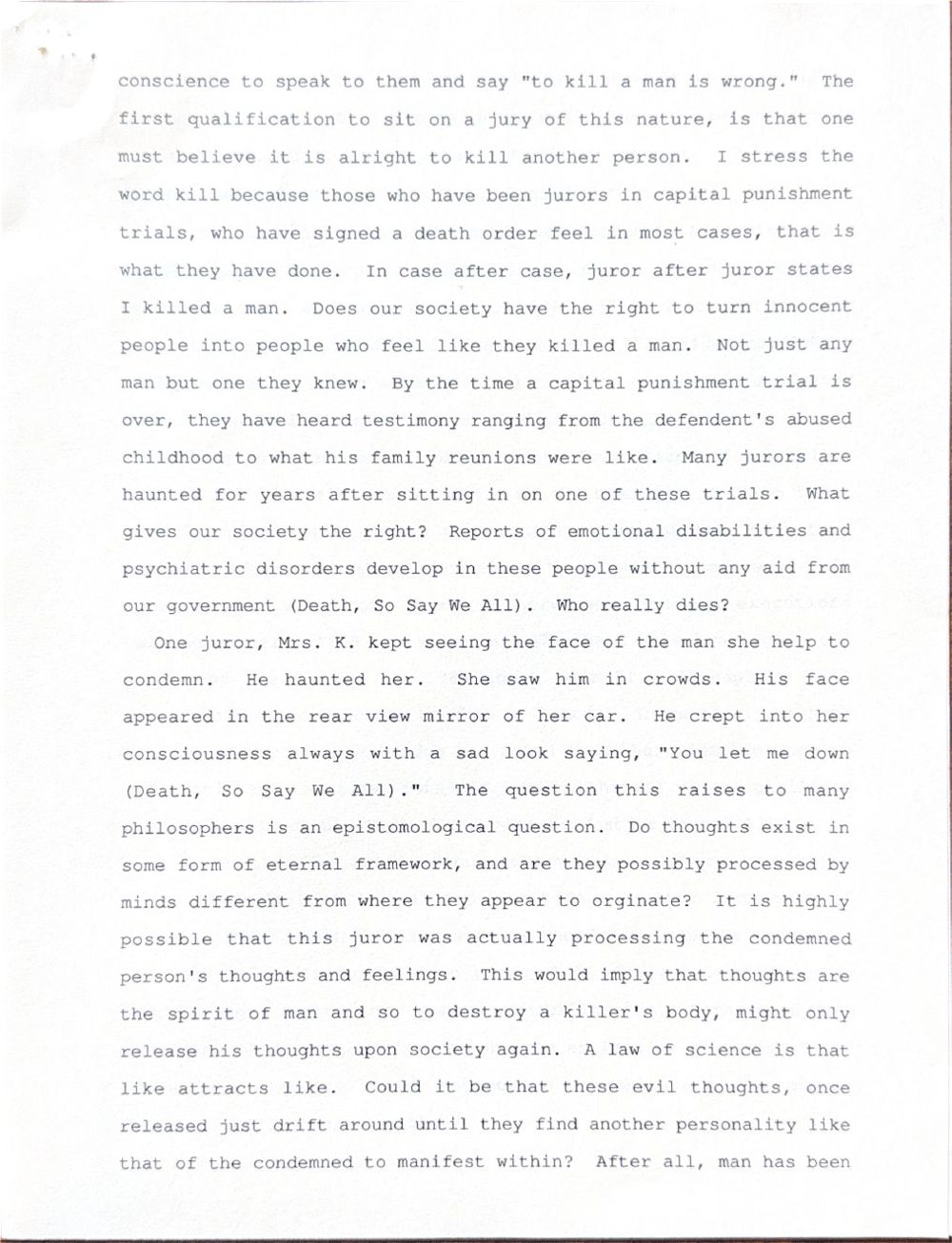
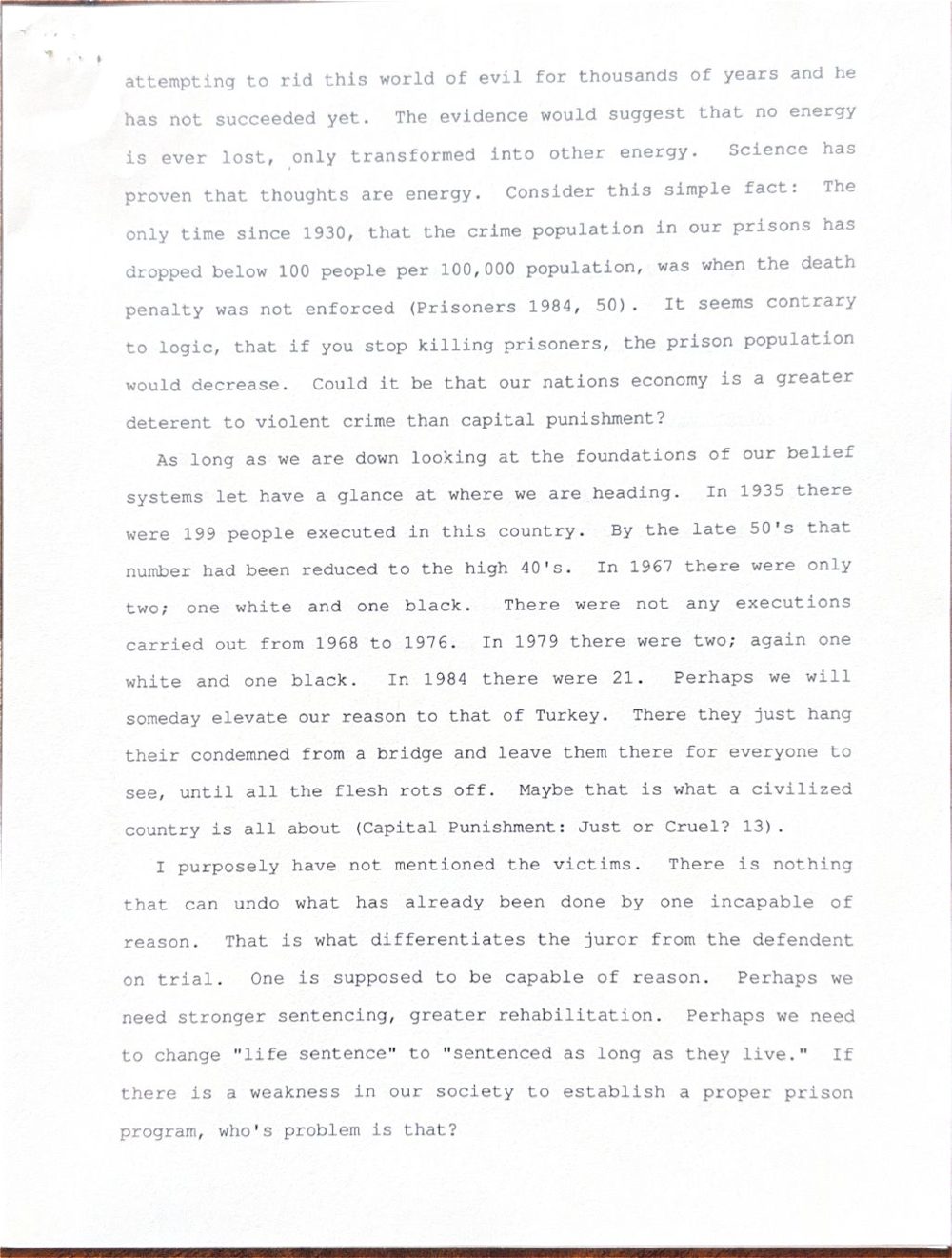
A freshman research paper for English 1113 that Tim also gave as a class speech. It argues against capital punishment by putting the practice itself on trial, calling to the defendant's chair Socrates, Gandhi, Jesus of Nazareth and Martin Luther King Jr., each condemned by someone else's belief system.
Midway through, the paper turns to a juror who could not stop seeing the face of the man she helped condemn, and asks a question that BEINGIS would return to: “Do thoughts exist in some form of eternal framework?” It goes on to say that “no energy is ever lost, only transformed into other energy.”
Classmates filled out an evaluation form for each speaker. The speech received a final score of 98. A few of the comments:
Researched well. Good presentation.
S.M.C.
Obviously well informed. You looked as if you enjoyed it. Good job!
W.W.
Best features were the knowledge of subject and strong points of argument and some different thinking from the norm.
R.M.
It has swung my opinion to one of re-consideration but not of decision.
E.D.
You really helped us think about an important moral, social, political issue. I'm proud of you.
A.
Evil thoughts drift around until manifested in a living being. (This is worth pursuing!)
A., summarizing a point of the speech
Not every comment was a compliment. Reviewers said he tried to fit too much into one speech, read from his notes, and leaned on an existentialism argument that felt too abstract. One of them, E.D., suggested dropping the epistemology argument. A note in the margin answers: “don't!!”
The research behind it
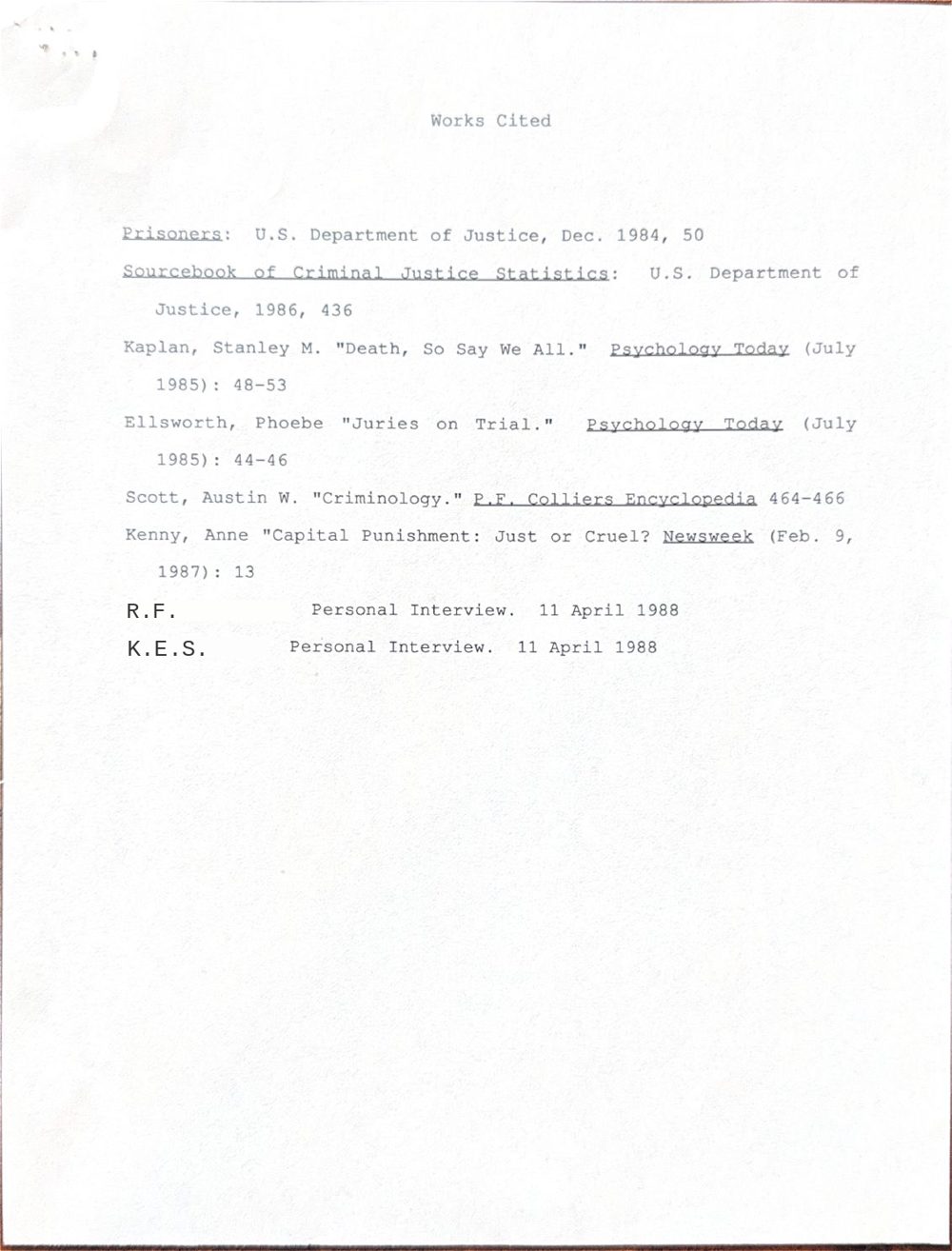
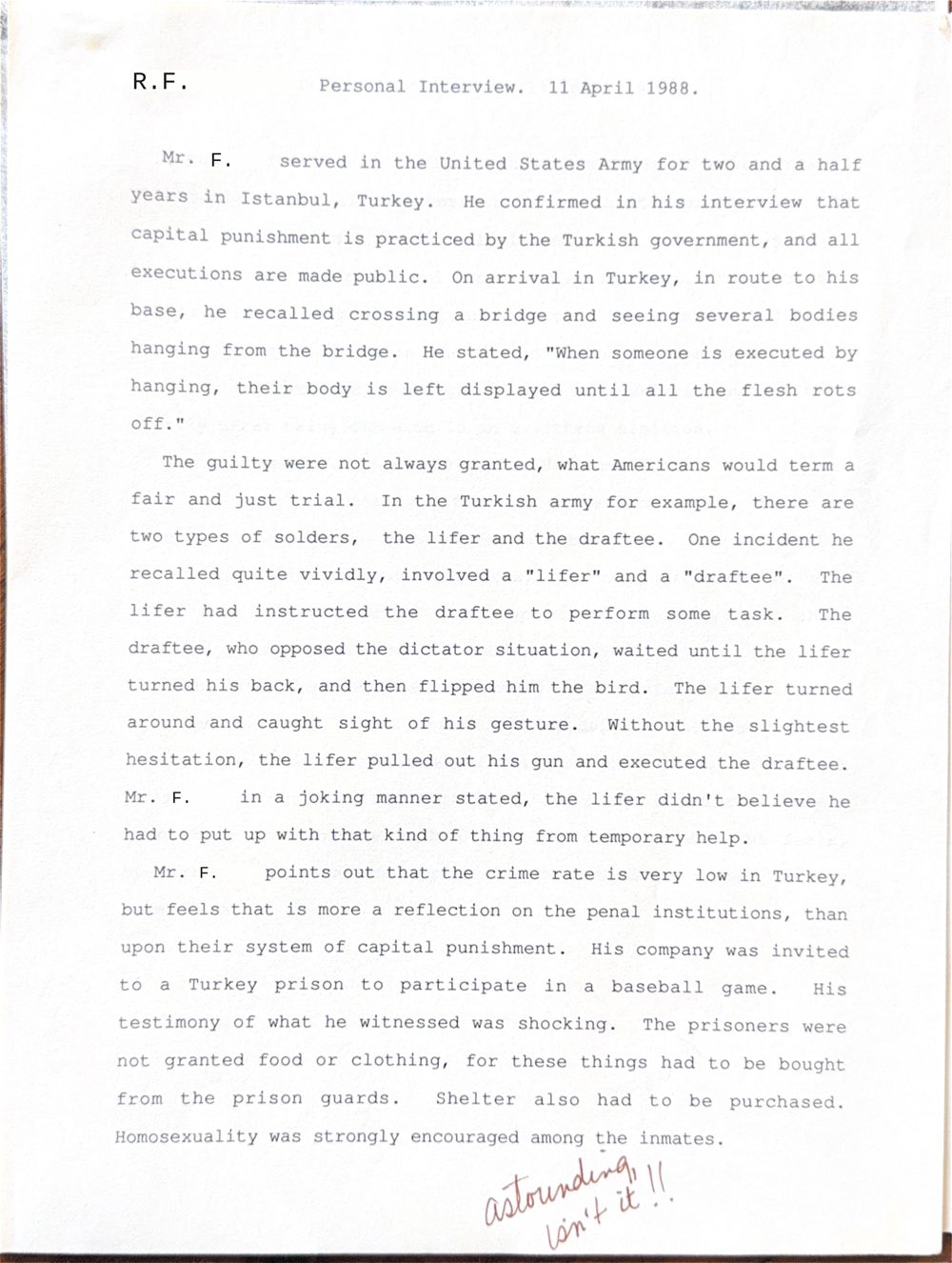
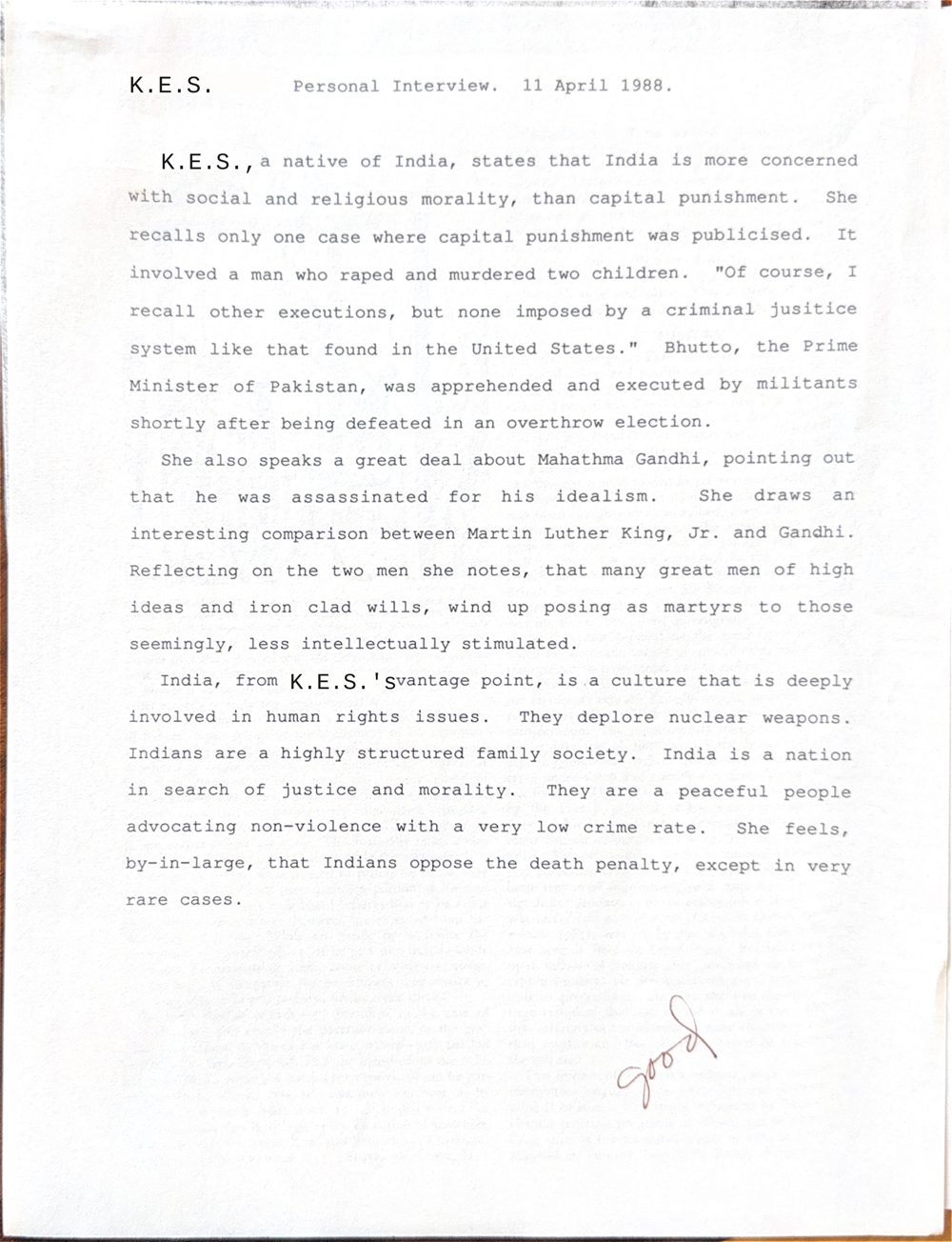
The day before the date on the paper, Tim interviewed two people and wrote up what they told him: R.F., who had served in the U.S. Army in Istanbul, on how Turkey carries out executions and runs its prisons; and K.E.S., a native of India, on how India views the death penalty, Gandhi and Martin Luther King Jr.
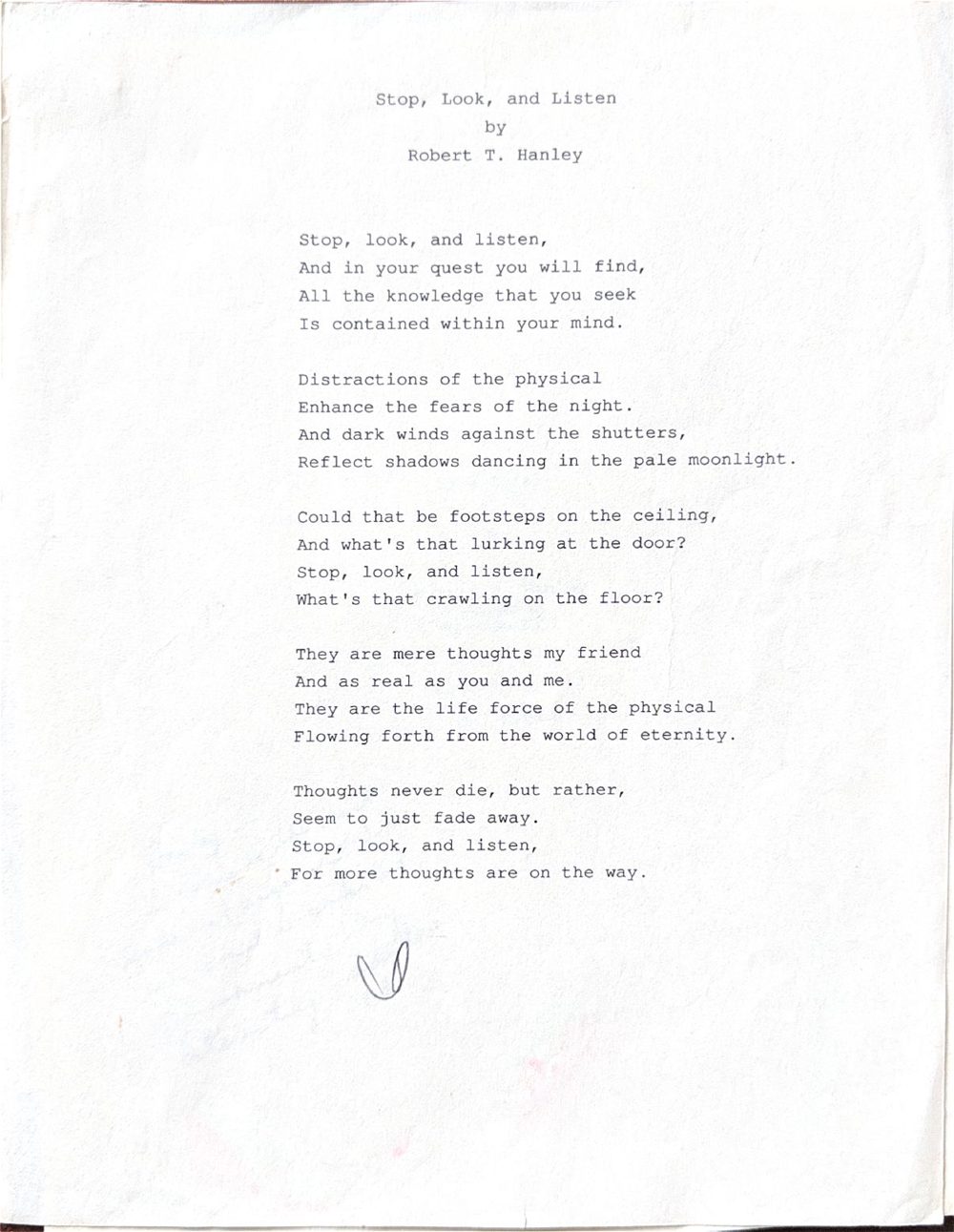
A typewritten poem written around the same time as the paper. It begins with the frightening sounds and shapes of a house at night, then recasts them as thoughts, which the poem treats as real: part of a life force flowing into the physical world from somewhere eternal. Thoughts, it says in the end, never die. They only fade, and new ones keep arriving.
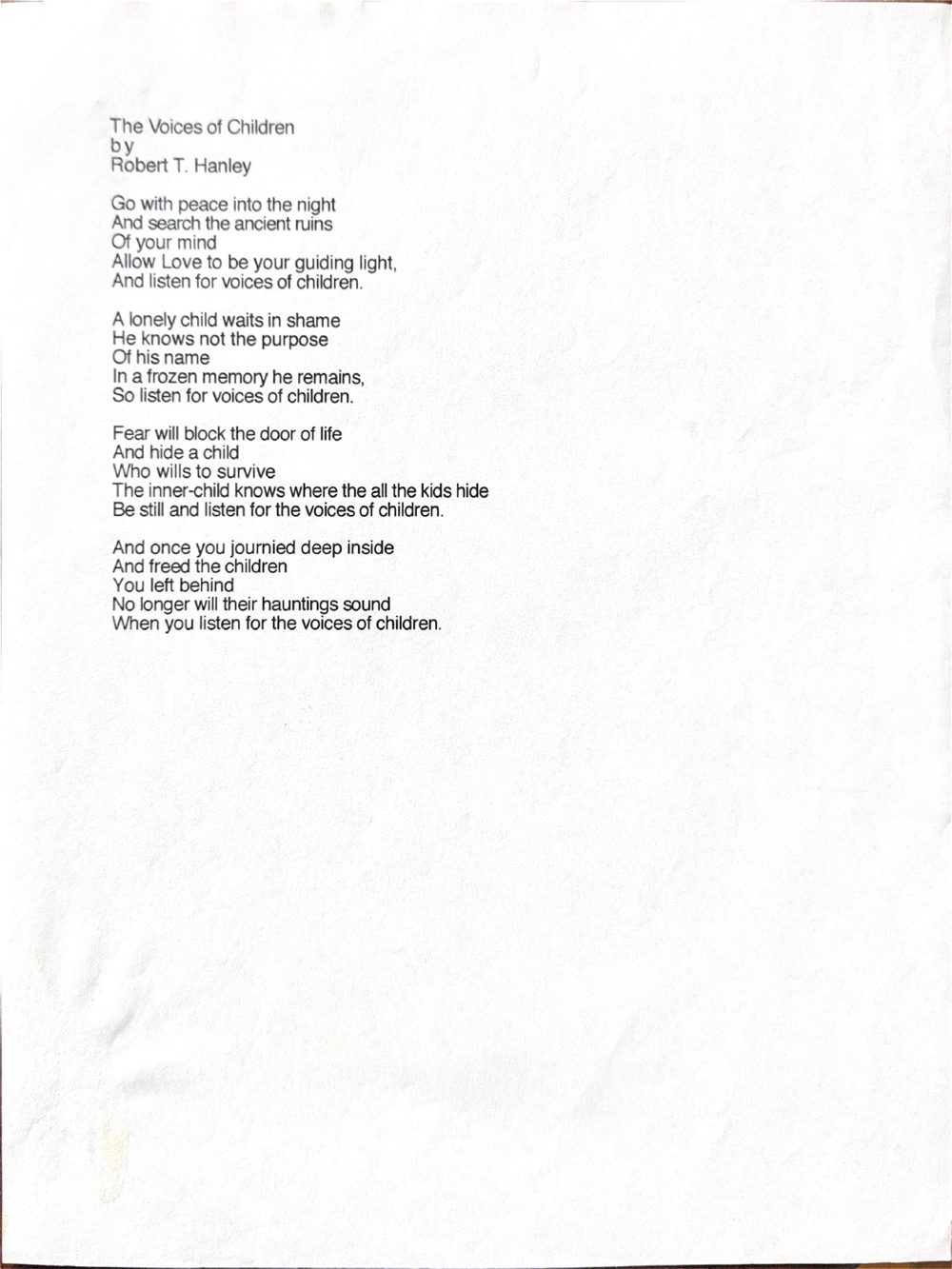
A poem that sends the reader down into the night to search the ruins of the mind, with love as the only light. What waits there is the inner child, frozen in shame and hidden behind fear. Going in to free those children, the poem says, is what quiets their hauntings.